
The best strategy for crypto trading in 2026

If you google "the best strategy for crypto trading in 2026", you will find all kinds of promises: 1,000% returns, revolutionary indicators, and supposed secrets that professional traders don't want you to know. The reality is much less spectacular but infinitely more useful: the best strategy is one that you can repeat consistently, that protects you when the market gets violent, and that allows you to capture profits when clear trends appear.
In this year 2026, with narratives that change every week, liquidity that appears and disappears like magic, and volatility that explodes for hours only to remain flat for days, success in trading depends on three fundamental elements: intelligent risk management, obsessive cost control, and unwavering discipline in execution. Everything else is just noise. This guide will show you how to build your own system step by step and how to implement it professionally on WEEX, so that you end up with a concrete and measurable method instead of a collection of loose tips.
From mental chaos to a structured method
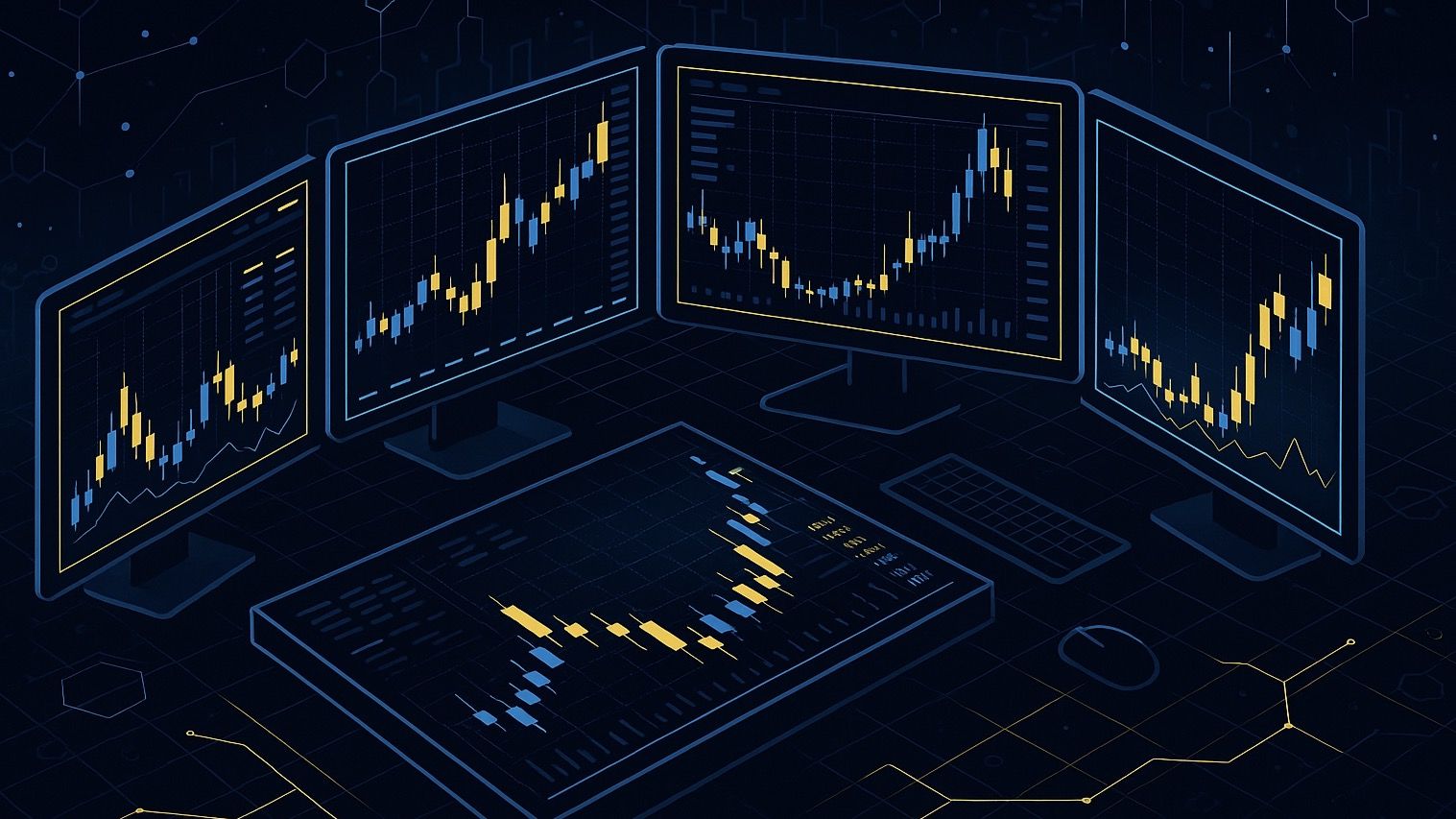
Let's start by organizing our ideas. A trading strategy is not "buying when it goes up and selling when it goes down" nor is it "following market sentiment." A real strategy is a set of specific rules that determine every action before the price moves a single point. The first thing you need to do is write down, physically on paper or in a document, how much total capital you are going to allocate to trading, what exact percentage you are going to risk on each individual operation, what your maximum allowed loss is per day and per week, and under what specific conditions you forbid yourself from opening new positions. Having these rules written down and visible removes emotional pressure when the market accelerates and prevents those impulsive decisions that you later regret.
It is also essential that you define your trading landscape with precision. You don't need to follow 30 different cryptocurrencies; with 2 or 3 pairs that have deep liquidity, such as Chainlink crypto for reliable on-chain analysis, reasonable spreads, and predictable behavior, you have more than enough. The narrower your playing field, the cleaner your analysis will be and the more effective your execution. If you are just starting out, focus exclusively on Spot with the most liquid pairs; only when you have demonstrated consistency for several months should you consider exploring perpetual contracts.
Concepts you cannot afford to ignore
Spot trading is the direct buying and selling of the digital asset, without additional complications or derivatives. It is the most transparent way to operate and the one that best forgives beginner mistakes. Perpetual contracts, on the other hand, are instruments that replicate the price of the underlying asset but include a funding fee mechanism that is charged or paid every 8 hours; they allow you to use leverage to open positions larger than your available capital, but that same characteristic can lead to forced liquidation if the market moves a few points against you. To provide context, many ask 'what is bitcoin cash and how does it work', which is a fork of Bitcoin with larger blocks for fast transactions, similar to how perpetuals handle funding.
Two concepts will define your actual experience when executing orders: slippage, which is the difference between the price you expected to get and the actual price at which your order is executed, and the spread, which is the difference between the best available buy price and the best sell price. In moments of low liquidity or high volatility, both factors can skyrocket and completely erode any mathematical advantage you thought you had. Commissions, even if they seem insignificant individually, add up quickly: in strategies that require multiple daily operations, the difference between paying 0.1% or 0.05% per operation can determine whether you end the month in the green or in the red.
To structure your operations, you need to choose one or at most two setups that you understand deeply. It could be a breakout with a retest in a key zone, a bounce in a value area with volume confirmation, or any pattern you have validated with historical data. The important thing is that you remain faithful to that system. Changing your strategy every week is the fastest way to run out of reliable data and lose confidence in your process.
Finding your style according to your personal reality
According to Investing.com, if you are starting from zero or prefer to operate with less pressure, the combination of Spot plus Swing Trading is usually the ideal starting point for pairs on fast chains like Solana crypto, where daily volatility offers clear setups. You look for movements that develop over several days or weeks, you work with small positions in relation to your capital, you establish wider stops that give the operation room to breathe, and you can step away from the screen without anxiety. This modality allows you to keep your regular job while you gradually develop trading skills.
If you already have experience and can dedicate specific hours to the market, Day Trading allows you to capture intraday movements and close all positions before ending your session. It requires total concentration during defined time windows, a meticulous record of each operation, and the discipline of never taking positions home. Scalping takes these requirements to the extreme: you need pinpoint precision, minimal costs, decision-making speed, and a mental toughness that only develops with months of intensive practice. If your personal situation does not align with these requirements, there is no shame in returning to Spot and Swing Trading.
There is another valuable tool you can combine with any style: strategic DCA. It is not about averaging down indefinitely on a losing position, but about planning staggered entries in a technically valid zone, always with a stop loss that completely invalidates the idea if the market proves you wrong, and with predefined levels to take partial profits.

Risk management: What no one wants to learn, but what pays all the bills!
Establish a concrete number and respect it religiously. For most traders, risking between 0.5% and 1% of total capital per operation is a reasonable range that allows you to survive negative streaks without destroying the account. Also define a daily loss limit that, when reached, forces you to close the platform without exceptions; if you find it difficult to comply, set an alarm on your phone or stick a post-it note on your monitor.
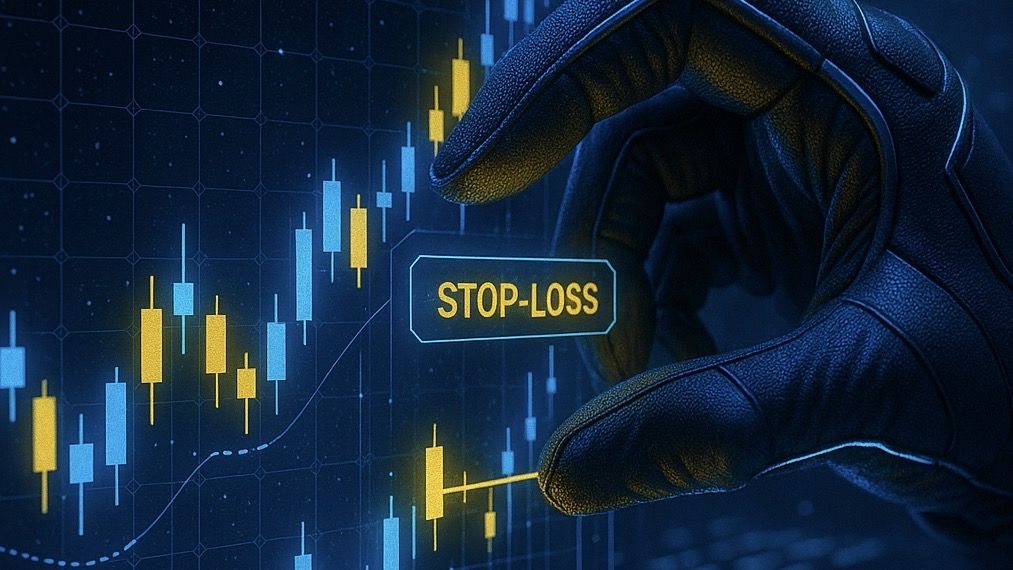
Plan your entries in advance, choosing logical stops based on market structure, not arbitrary round numbers (If you are wondering 'what is stop loss', it is basically your automatic exit level to cut losses and protect capital). Aim for risk/reward ratios that give you a mathematical edge: if you risk one to gain one and a half or two, you need a lower win rate to be profitable in the long run. When the price moves in your favor and you already have floating profits, moving the stop to breakeven can make sense, but do it following a predefined rule, not as an emotional reaction to the fear of losing what you have gained. Applying stop loss in trading this way gives you a real mathematical advantage against volatility.
Partial profit-taking is not a sign of cowardice or lack of conviction; it is professional management of psychological biases. If you offload a third or half of your position at planned levels, it is much easier for you to let the rest run with peace of mind. And when you accumulate several consecutive losses, immediately apply a cooling-off period: reduce your position size to 50% or stop trading completely for 24 hours. This simple act of discipline can save weeks or months of work.
The invisible math of costs
Most novice traders underestimate the impact of costs because they are fragmented and hidden. A little commission here, some slippage there, a wider spread in moments of low liquidity, and suddenly your mathematical edge evaporates completely. That is why it is critical that you operate exclusively during the hours with the best liquidity for your chosen pairs, that you avoid entering when movements are already extended and volume is exhausted, and that you keep a real record of your costs for at least a full week: add up the commissions paid, calculate your average spread, and measure the typical slippage in your executions. For example, check the 'bitcoin cash price today' to see how liquidity affects spreads in altcoins. That simple Excel spreadsheet is worth more than any sophisticated technical indicator. On WEEX you can review the commission structure in detail both in spot and in Perpetual contracts, information that is crucial to adjust your plan to markets where the total cost does not destroy your profitability.
Your daily trading routine: from preparation to closing
Before opening the platform, spend ten minutes reviewing your narrow list of pairs. Mark the updated reference levels, identify the zones where liquidity is concentrated, and write down a main hypothesis and an alternative for the session: if the price breaks and retests this level with increasing volume, I execute this operation; if it rejects this other level, I stay out of the market. Monitor variations like the 'ripple price' to understand flows in stablecoins and cross-border payments. Open positions only when the market confirms what you previously wrote; if there is no clear confirmation, do not trade out of boredom or FOMO.
On WEEX you can configure alerts from the app so that the market comes to you when your conditions are met, instead of being glued to the screen waiting for something to happen. If you are interested in observing how traders with verifiable experience manage their positions, explore Copy Trading, but use it as educational material on position management, never as automatic signals to copy blindly.
During the active operation, resist the temptation to move your stop-loss to "give the operation more room." If the price reaches your first profit-taking level, execute the partial sale according to your plan and record the result. If the operation is invalidated and hits your stop, accept the loss without emotions of revenge against the market. At the end of your session, evaluate your performance with objective metrics: number of operations executed, win rate, average percentage of profit versus loss, and above all, how faithfully you followed your predefined rules. In the early stages, your main goal is not to maximize profits but to maximize discipline. Consistent profits come as a natural consequence of a well-executed process.
Practical implementation on WEEX
If you are starting out, the most sensible path is to start exclusively with Spot. Open your account, complete the security verification, select your two or three working pairs, and trade with small amounts that do not affect your emotional stability. From the first operation, configure your stop-loss and take-profit orders without exception. As your process gains demonstrable consistency over several months, you can evaluate the incorporation of perpetual contracts for specific strategies, but only after fully understanding how the funding rate and leverage work and how both multiply your risk.
If you want to accelerate your learning curve, use the WEEX Crypto Wiki to study fundamental concepts about order types, market microstructure, and trading psychology. Keep every aspect of your operation documented in a detailed trading journal. When you identify critical levels for your operations, create alerts in the mobile app and avoid the temptation to check the price every five minutes. The goal is for your system to protect you from your own emotional impulses.
The uncomfortable questions that can save you from ruin
Does your strategy depend on guessing the next explosive move or can it generate results in sideways markets? If you need perfect trending conditions to survive, your strategy is not robust. Do your profits come from a healthy distribution of multiple operations or do you depend on one or two exceptional trades? If your entire result depends on getting that one big move right, your risk of ruin is too high. Can you explain your entire system on one page without using incomprehensible technical jargon? If you can't, what you have is intuition disguised as methodology.
The real work is in simplifying until everything is clear and measurable. That simplicity gives you operational freedom: when the market is erratic and without a clear direction, you reduce your risk or stay out completely; when conditions align with your system, you execute with total confidence.
The truth about the best strategy
The best strategy for crypto trading in 2026 is not some secret formula or magic indicator: it is a clear system that you can explain and execute consistently, costs kept under strict control, and unwavering discipline in the execution of your rules. Choose two or three pairs with deep and stable liquidity, define your risk per operation and respect it without exceptions, plan each entry and exit before executing, and measure your results objectively every week.
Use WEEX as your professional execution platform: spot to develop your initial process, perpetual contracts when you have the necessary experience, Crypto Wiki to deepen fundamental concepts, Copy Trading to observe professional position management, and alerts in the app to maintain emotional discipline. You don't need to predict the future of the market; you need a robust process that keeps you in the game long enough to capture the moves that really make the difference. Register on WEEX and start testing strategies until you find the one that best suits you.
Risk Disclosure: WEEX and its affiliates provide digital asset exchange services only where it is legal to do so and for eligible users. All content is general information and does not constitute financial advice. Before trading, seek financial advice. As with any investment, cryptocurrency compound interest products involve risks, including market volatility and platform security. Cryptocurrency trading is a high-risk activity and can lead to the total loss of your assets. By using WEEX services, you accept all risks and related terms. Never invest more than you can afford to lose. Consult our Terms of Use and our Risk Disclosure for full details.