Comparison of stablecoins in LATAM

In a world where the volatility of cryptocurrencies like Bitcoin and Ethereum can be an obstacle to mass adoption, stablecoins present themselves as a stable and reliable solution. Especially in Latin America (LATAM), where inflation, economic instability, and the need for efficient remittances drive their use, these stablecoins are rapidly gaining ground. In this article, we will explore what stablecoins are, their uses in the region, and a comparison of the most popular options.
What are stablecoins?
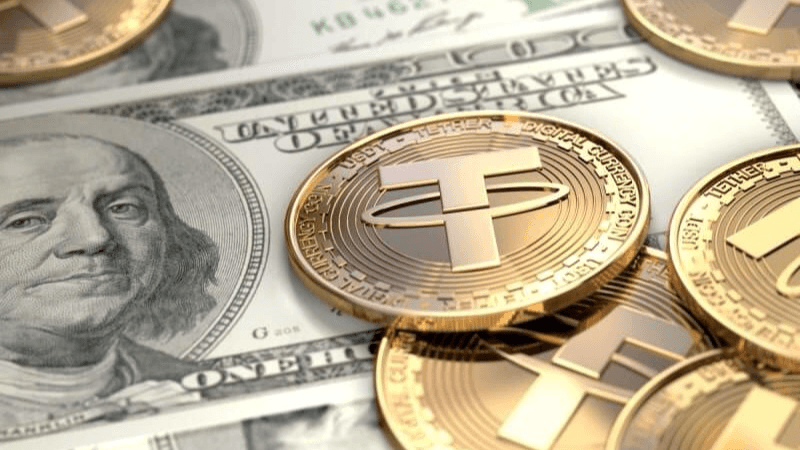
Stablecoins are a type of cryptocurrency designed to maintain a stable value, generally pegged to a fiat currency like the US dollar (USD). Unlike other crypto assets that fluctuate drastically, stablecoins seek to minimize volatility, making them ideal for everyday transactions, savings, and international payments. First launched in 2014 with Tether (USDT), these coins operate on blockchains like Ethereum, Tron, or Solana, which allows for fast and low-cost transfers globally. These coins are practically immune to market sentiment.
The main mechanism behind their stability is backing or pegging. For example, a stablecoin like USDT is backed 1:1 by dollar reserves, cash equivalents, and other assets. This means that for every unit issued, there is an equivalent dollar in reserves, verified through periodic audits. According to Investopedia, stablecoins not only facilitate the digital use of fiat currencies but also reduce the complexity and risk often associated with traditional cryptocurrencies.
In LATAM, stablecoin adoption has grown exponentially. A report by Chainalysis indicates that in 2024, the region was second in crypto adoption globally, with stablecoins dominating transaction volume due to inflation in countries like Argentina and Venezuela. By 2025, crypto volume in LATAM reached $27 billion, with stablecoins representing more than 90% in some exchanges. This trend is due to the need to protect the value of money in unstable economies, where the crypto dollar (also known as digital dollar) offers an accessible alternative without depending on traditional banks.
Types of stablecoins
There are several types of stablecoins, which are classified according to their backing mechanism. Understanding these types is fundamental to choosing the right option in LATAM, where the diversity of economic needs varies by country.
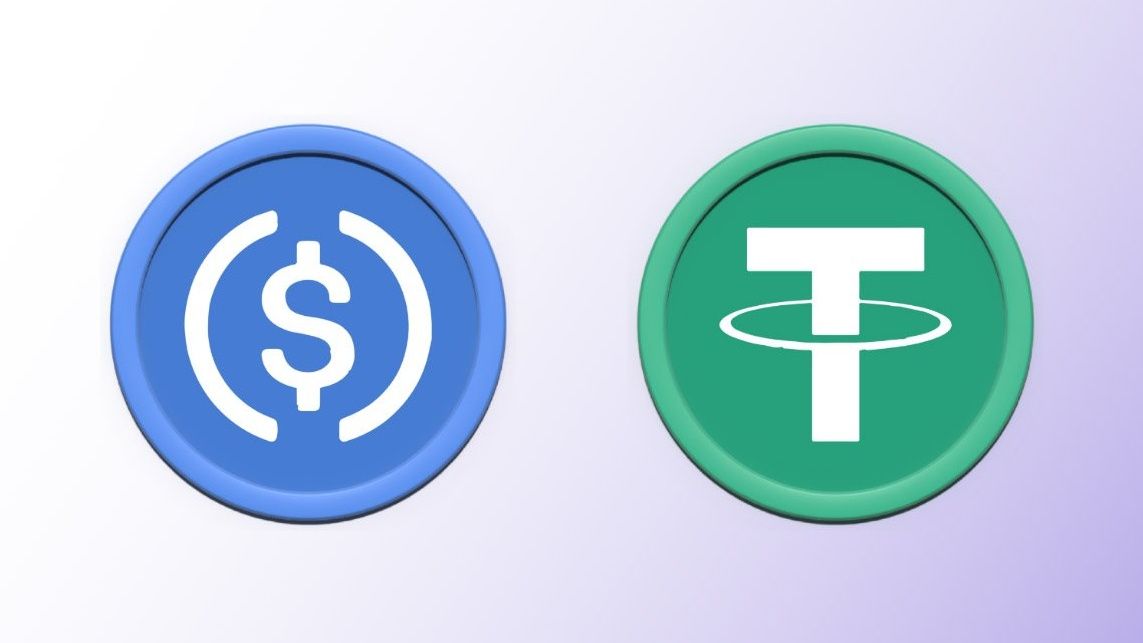
- Fiat-backed stablecoins: These are the most common and are pegged to currencies like the USD. Some examples include USDT and USDC. Their backing is direct: reserves in banks or equivalent funds ensure their 1:1 value. These coins are ideal for beginners due to their simplicity and liquidity.
- Commodity-backed stablecoins: These stablecoins are anchored to assets like gold or real estate. Although they are less popular in LATAM, they offer diversification against inflation.
- Crypto-backed stablecoins: Like DAI, they use over-collateralization with other cryptocurrencies. This makes them decentralized, but more volatile in bear markets. They require 150% collateral to maintain stability.
- Algorithmic stablecoins: They maintain the peg through algorithms that adjust supply and demand, without having physical backing. They are innovative but risky, as seen in past collapses.
In LATAM, fiat-backed coins dominate due to their reliability, representing 45% of the volume, with USDT in the lead.
Uses of stablecoins in LATAM
Stablecoins are not just a refuge against volatility; in LATAM, they help address real problems like inflation, financial inclusion, and remittances. With economies like Argentina's, which suffers from hyperinflation, citizens use stablecoins to preserve the value of their savings. Bitso reports that in Argentina, 50% of crypto purchases in 2024 were stablecoins, as they are used as "digital dollars."
One of the main uses is in remittances. LATAM receives billions in annual shipments, but traditional costs exceed 6%. Stablecoins reduce them to fractions of a cent, with instant transactions. Fireblocks highlights that the region leads in adoption for cross-border payments, surpassing other global areas. In Brazil and Mexico, companies use stablecoins for commercial transactions, mitigating exchange rate risks.
Another key use is financial inclusion. With 70% of the population unbanked, stablecoins allow access to services through mobile apps. Chainalysis mentions that stablecoins facilitate saving in countries with devaluation, like Venezuela. Additionally, in DeFi (decentralized finance), they are used for loans and liquidity provision. A report by Dune Analytics shows that in 2025, USDT and USDC represented 90% of the volume on exchanges operating in Latin America.
Small businesses in Argentina use them for stable inventories, while in Brazil, the Central Bank monitors their use in international transfers. Bitso highlights that stablecoins foster economic and technological stability in the region.
Popular stablecoin options in LATAM
In LATAM, the most used stablecoins are USDT, USDC, and DAI.
- USDT (Tether): The most adopted, it has a market capitalization of $166 billion in 2025. Backed by fiat reserves and assets, it is ideal for trading and remittances. In Argentina, it dominates 61.8% of crypto activities.
- USDC (USD Coin): Issued by Circle and backed by reserves in funds like BlackRock. With $67 billion in circulation, it is preferred for its transparency and monthly audits. In LATAM, it is used on platforms like Bitso for commercial transactions.
- DAI: Decentralized, generated through MakerDAO with crypto collateral. It offers freedom without intermediaries, popular in DeFi. Its adoption in LATAM is growing due to its resistance to censorship.
Comparison of popular stablecoins
To give you a clearer view, we offer a comparative table based on 2025 data:
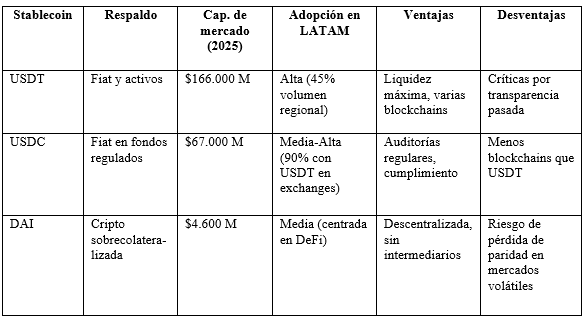
Adapted from Chainalysis and DefiLlama. USDT is criticized for opacity, but USDC stands out in regulation. DAI offers decentralization, ideal for advanced users. In LATAM, USDT wins for accessibility, but USDC for trust.
How to acquire and use stablecoins in LATAM
To buy stablecoins, platforms like the WEEX exchange offer secure and easy-to-use trading. Visit WEEX to access trading pairs like USDT/BTC with low fees. Other options include Bitso or Binance, but verify local regulations. Stay up to date on cryptocurrency news to learn about the most used stablecoins in your home country.
Conclusion
Stablecoins are revolutionizing LATAM by offering stability in times of uncertainty. From USDT as the leader to its solid competitor DAI, the comparison shows enough diversity to satisfy different needs. With adoption on the rise, driven by remittances and savings, the future is promising. Always research and use trusted exchanges, like Weex, to maximize benefits.
Are you ready to start? Register on WEEX, buy USDT, USDC, or DAI, and start sending and saving without the hurdles of traditional banking. The future of money is already here!
Disclaimer
WEEX and its affiliates provide digital asset exchange services, including derivatives trading and margin trading, only where it is legal to do so and for eligible users. All content is general information and does not constitute financial advice. You should seek financial advice before trading. Cryptocurrency trading is a high-risk activity and can lead to the total loss of your assets. By using WEEX services, you accept all risks and related terms. Never invest more than you can afford to lose. Consult our Terms of Use and our Risk Disclosure for full details.