
From Candy Vendor to Crypto Billionaire: Coinbase Founder's $8 Billion Startup Rule


Original Author: TRACER
Brian Armstrong is one of the wealthiest figures in the cryptocurrency field. He founded the Coinbase exchange and earned $8 billion in just five years, making him one of the world's top investors according to Forbes. Here are his Memecoin secret, strategy, and five major predictions.
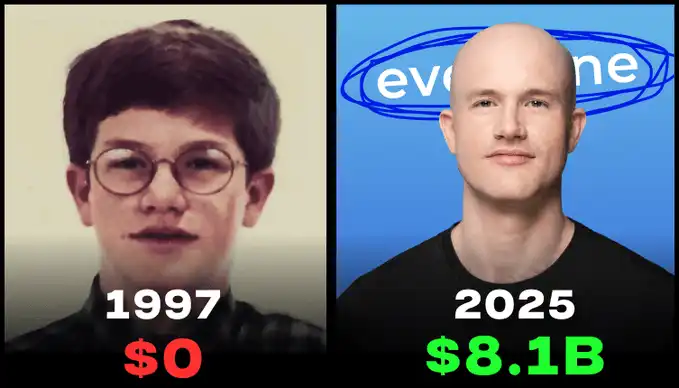
The significant development of the cryptocurrency industry needs to be grateful to a few individuals, and Brian Armstrong is one of them. He entered this field due to a belief in technology and completely changed his life trajectory with his belief in Bitcoin. Brian Armstrong's growth experience and industry insights are worth revisiting repeatedly, drawing insightful revelations:
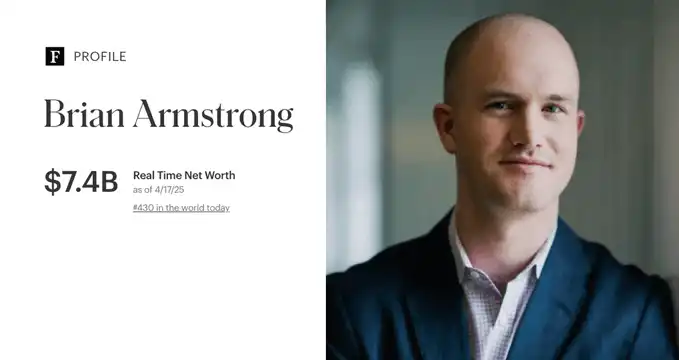
Brian was born in San Jose, California, with an entrepreneurial potential from a young age. In an interview, he once admitted that he was called into the principal's office for selling candy on the school playground. During high school, he developed a passion for internet technology and started learning to code.

He later pursued his studies at Rice University and obtained a master's degree. After graduation, he chose to live in Buenos Aires, Argentina, for a year, where he witnessed severe hyperinflation. The method to combat this economic turmoil—cryptocurrency—became the direction he would delve into in the future.

After graduating from college and going through a series of jobs, he co-founded a platform with his friends that matched private teachers with students. The platform allowed teachers to post personal information and offer teaching services to potential student clients. Brian Armstrong served as the CEO of the project for eight years, eventually selling it for a price equivalent to 21 times his annual income.
During Christmas 2010, Brian Armstrong first learned about Bitcoin while staying at his parents' home in San Jose. He stumbled upon the seminal document written by Satoshi Nakamoto—"Bitcoin: A Peer-to-Peer Electronic Cash System." From that moment on, he began contemplating a venture.

He held a guiding principle for entrepreneurship: "The one who gets rich isn't the gold miner, but the one selling shovels." At that time, there was a direct competitor in the industry, namely the famous Mt. Gox, but that platform suffered from serious transaction latency issues. In 2021, Brian Armstrong and Fred Ehrsam officially registered Coinbase.
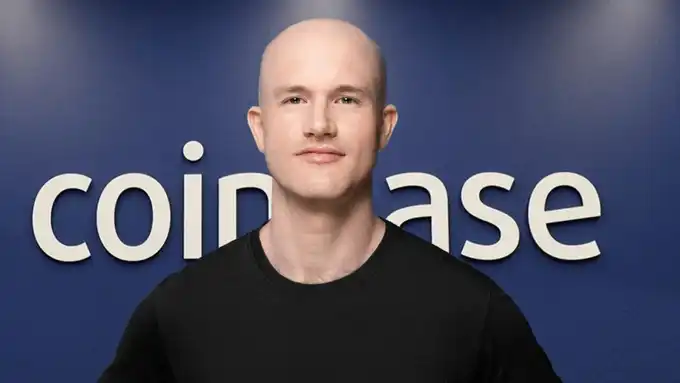
Coinbase has begun to receive a large amount of investment, with a valuation that is more than eight times Brian's original target. He had initially planned to create a $1 billion company. Today, Brian Armstrong is living the dream, holding a fortune of millions. He is also actively sharing his insights and advice, which you should definitely consider:
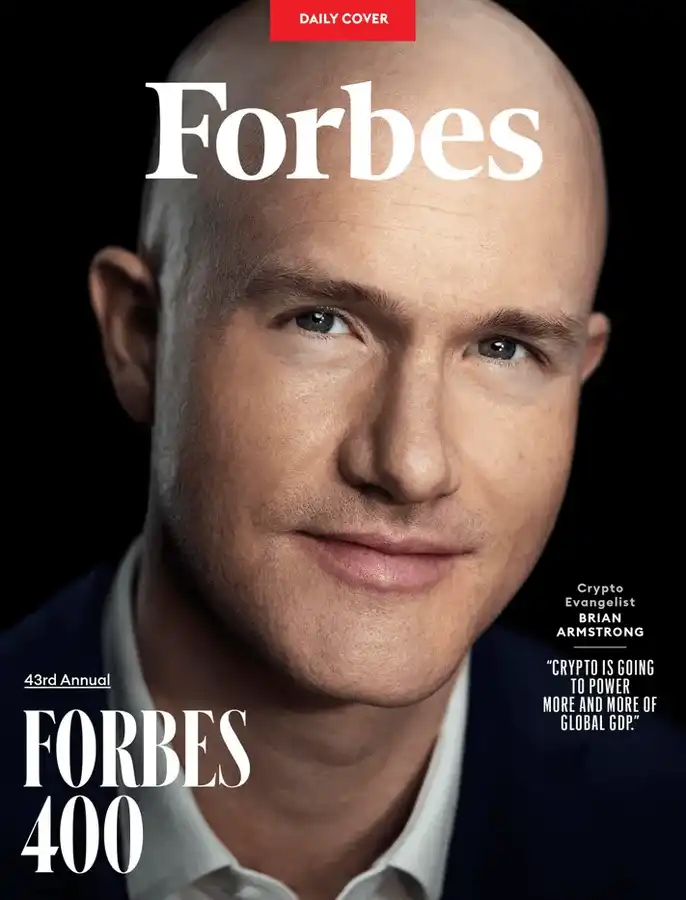
Currently, Brian Armstrong firmly believes that it is necessary to reform cryptocurrency regulatory policies. The previous government severely hindered the industry's development, and now is the best time to correct this issue. There is discussion across the board regarding the appointment of an SEC chairman who supports cryptocurrency and the establishment of a clear and stable legal framework, which is a significant positive for the cryptocurrency market.
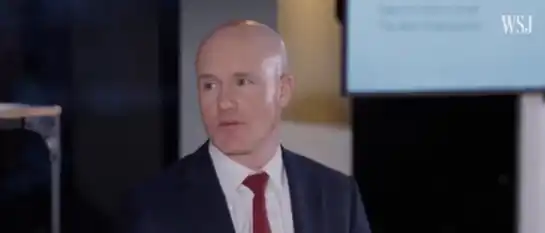
Brian Armstrong holds a very positive view of Memecoins and believes they have some development prospects. In his view, just as GIFs and internet memes have become a part of the internet economy, Memecoins could also become an important cultural and even economic phenomenon. This is a significant perspective that is worth thinking deeply about.
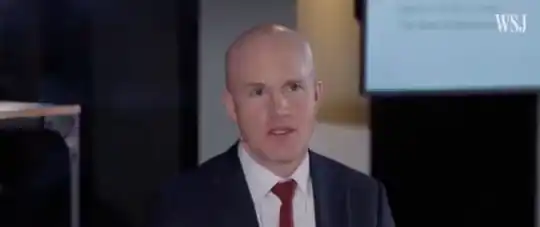
Brian also shared a media browsing tip: you should never listen to the promoters on YouTube. When analyzing a project, pay particular attention to 3 key elements:
GitHub code contribution quantity Team's activity on Twitter and Discord Responsiveness to critical opinions, if the project team remains silent, this is a danger signal. The new Trump administration's policies could significantly increase institutional fund flows into the market, all driven by government actions that will effectively enhance the confidence of financial institutions, with the core driving force being the government's advancement of relevant legislation regarding stablecoins and the digital dollar.
Brian Armstrong believes that cryptocurrency will never replace the traditional financial system but will complement it powerfully. Exchange-Traded Fund (ETF) trading, asset custody services, and deeply integrated products with banks and fintech platforms will be the development trend. This is essentially a practical suggestion: be sure to develop products that can interface with the traditional financial architecture.
You may also like

Senior Public Company Financial Audit: Taking Hashkey as an Example, Discussing Which Account to Include for Exchange Issued Platform Tokens?

Bankless Founder: Why I Sold All My ETH
Morning News | Hyperliquid launches off-chain event prediction market contracts; Strategy completes $1.5 billion debt buyback; Kelp DAO announces rsETH has fully recovered

Morning Report | Binance launches DYOR research tool; YZi Labs launches recruitment platform YZi Talent; Vitalik states that the Ethereum Foundation will "downsize" and reduce the amount of ETH sold

Insiders betting on Musk are reaping "historic returns."

Ten Thousand Characters Breakdown of On-Chain Vaults: Eight Major Tracks, Who is Rising and Who is Declining?

Behind NEAR's Doubling: 3 Major Trends Becoming the Engine of Coin Prices

Visa and Stripe are both working on stablecoins, but their focus is not on payments

How Traders Keep Profits When PEPE WLD and FET Start Moving Fast Again

It's easy to conquer a city, but difficult to govern it: Polymarket wants to establish a presence globally but still has to bow down everywhere
Morning News | Michael Saylor stated that this week he bought bonds instead of Bitcoin; StablR was attacked and lost about 2.8 million dollars; the U.S. Congress is pushing the Bitcoin Reserve Act again

SuperEx's Mars exploration dream: Digital currency is the key to unlocking economic exchanges in the interstellar era
Key Takeaways: Full Text of Google Chief Scientist Shanahan's Speech

Agentic Design Patterns: A book that made me rethink "What exactly is an Agent?"

The richest chairman of the Federal Reserve in 112 years has arrived: Kevin Warsh is rewriting the rules
Vitalik talks about the future of the Ethereum Foundation: a smaller, more distinctive, yet more enduring ship

New Types of Information Laundering in Prediction Markets: How Secrets Integrate into Investment Signals

Vitalik emphasized in a post that Ethereum must be "amazing," but the foundation is not the center
Senior Public Company Financial Audit: Taking Hashkey as an Example, Discussing Which Account to Include for Exchange Issued Platform Tokens?
Bankless Founder: Why I Sold All My ETH
Morning News | Hyperliquid launches off-chain event prediction market contracts; Strategy completes $1.5 billion debt buyback; Kelp DAO announces rsETH has fully recovered
Morning Report | Binance launches DYOR research tool; YZi Labs launches recruitment platform YZi Talent; Vitalik states that the Ethereum Foundation will "downsize" and reduce the amount of ETH sold
Insiders betting on Musk are reaping "historic returns."
Ten Thousand Characters Breakdown of On-Chain Vaults: Eight Major Tracks, Who is Rising and Who is Declining?

Contents
Popular coins
Latest Crypto News


