
- Buy Crypto
- Markets
 Futures
- Spot
- Copy Trade
- Earn
- More
Former Meme Coin ORE Makes a Comeback: New Economic Model Launched, with Monthly Gains of Over 30x

Original Article Title: "Former DeFi Gem ORE Makes a Comeback, Surging 30x in a Single Month This Time"
Original Article Author: Nicky, Foresight News
In 2024, ORE initially emerged as the Solana Renaissance hackathon champion, and its usage of a proof-of-work mechanism had previously caused network congestion on Solana due to high transaction volume.
The once-silent Solana ecosystem project ORE has returned to the market spotlight after nearly a year of dormancy. This PoW mining protocol, once jokingly referred to as "Solana clogger," has made a comeback with a newly upgraded protocol. Not only has it driven the token price surged from around $10 to over $600 in a month, but it has also ranked as the second-highest protocol earner on the Solana network, with a daily protocol revenue of over $1 million, second only to Pump.fun. This growth was predominantly achieved within DEXs.
ORE was created by an anonymous developer known as Hardhat Chad, whose identity model follows the Bitcoin Satoshi Nakamoto tradition. In the early stages of the project, Hardhat Chad single-handedly developed ORE V1. Currently, the team includes members like Neil Shahani responsible for project development and community communication.
As the project progressed, ORE established Regolith Labs as its formal development entity.
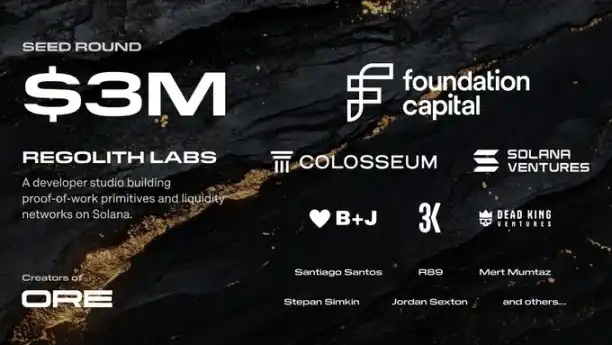
In September 2024, the development team behind ORE, Regolith Labs, completed a $3 million seed funding round led by Foundation Capital, with participation from Solana Ventures. This funding was primarily used for team expansion and technical development.
Subsequently, the project team launched the V2 version. However, the early V2 version failed to fully address the incentive misalignment issue, resulting in low mining rewards and a prolonged slump in ORE's price.
After a year of exploration, the team recognized the fundamental value loss issue in traditional PoW and decided to undergo a comprehensive overhaul. On October 22, 2025, ORE officially released a new announcement, stating that after the redesign, it could accumulate protocol revenue, achieve a sustainable tokenomics, and accelerate the mission of creating a Solana-native value store.
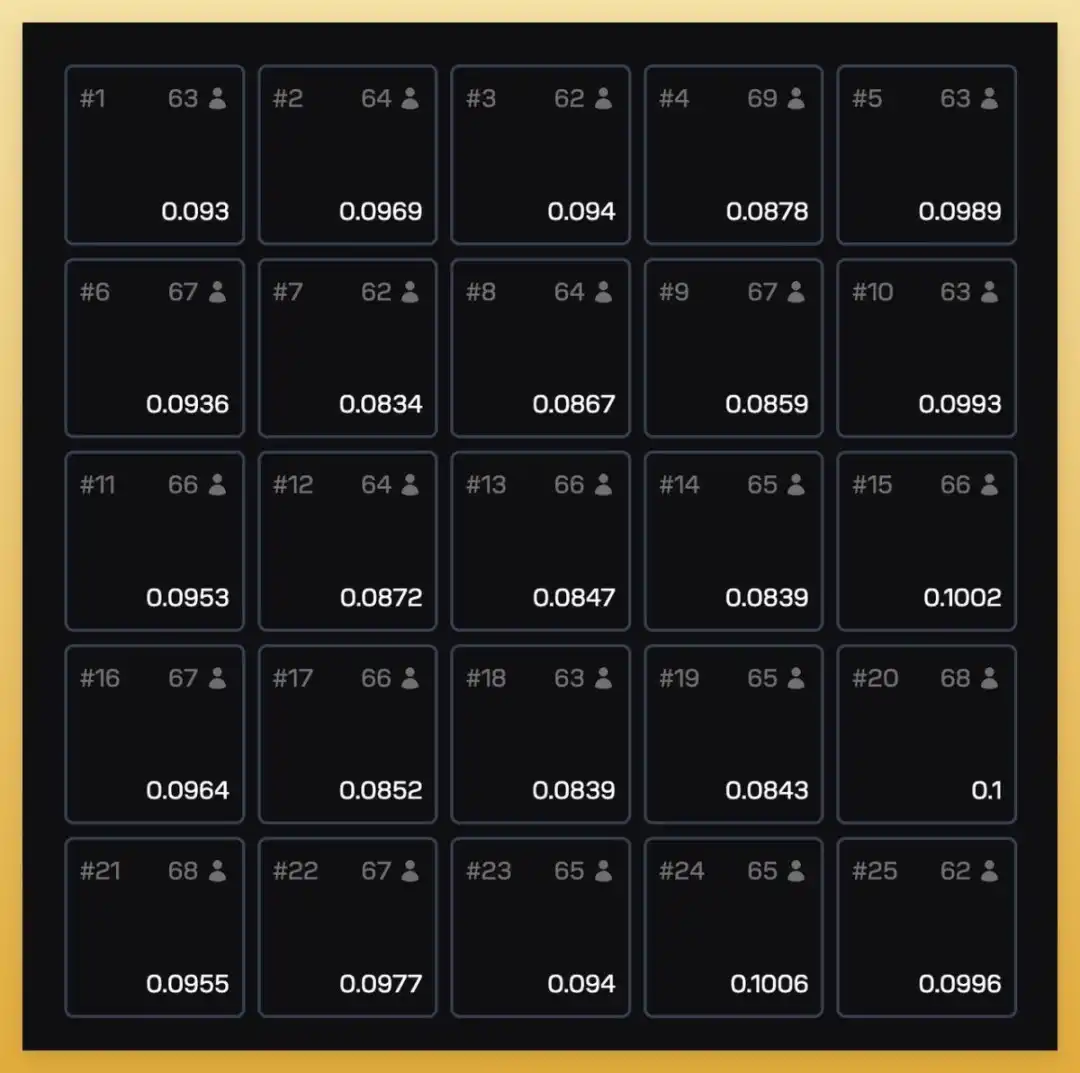
The new protocol introduces a 5x5 grid mining system. Each round lasts one minute, during which miners occupy blocks on the grid by deploying SOL. At the end of each round, a winning block is selected by the system through a secure random number generator. The miners on this block proportionally share all SOL from the other 24 blocks. Additionally, one miner on the winning block has the opportunity to receive an additional 1 ORE reward (approximately once every three rounds). This design transforms the 'zero-sum game' into 'collective value redistribution,' where the losing miners' SOL flows entirely to the winners, preventing value outflow.
The protocol also features a 'Motherlode' pool mechanism, where 0.2 ORE is contributed to the pool each round, with a 1:625 chance of triggering the pool. If the reward is not triggered, the pool continues to accumulate until a lucky miner claims it in a future round.
Economic Model: Deflationary Mechanism and Value Accumulation
The core innovation of the ORE protocol lies in its value capture mechanism. All mining rewards incur a 10% 'refining fee' upon withdrawal, with these tokens automatically distributed to miners based on the unredeemed ORE proportion. The longer miners hold the mined ORE, the more they receive.
Moreso, the protocol automatically collects 10% of SOL mining rewards as protocol income, used to buy back ORE tokens from the open market. In the past seven days, the protocol income amounted to 21,529 SOL (approximately $3.6 million), driving a buyback of 10,381 ORE tokens. 90% of the repurchased tokens are permanently 'buried,' while the remaining 10% is allocated to stakers.
This design allows for the net issuance of ORE to dynamically adjust between deflation and inflation. When the protocol income is substantial, the entire system enters a deflationary state.
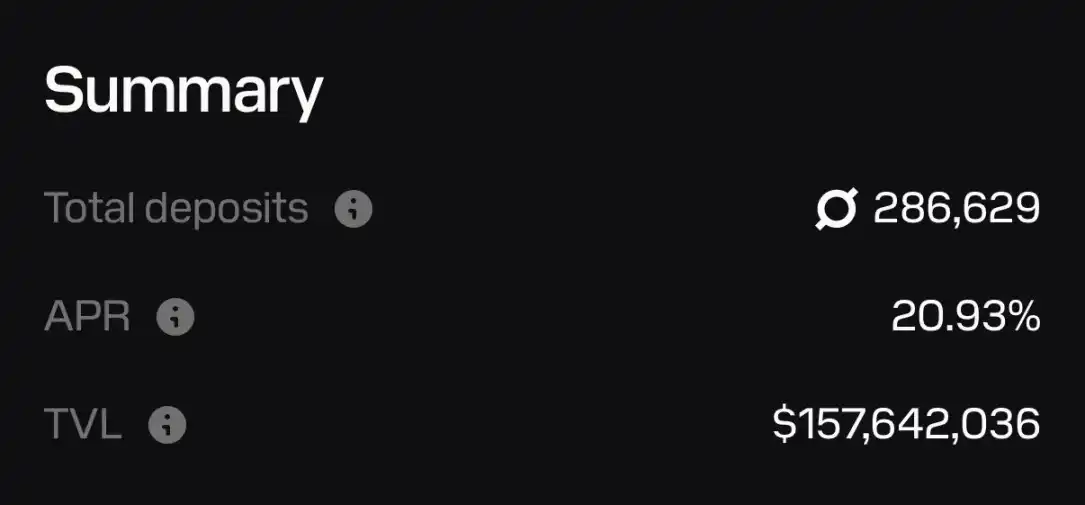
Currently, the protocol has a total of 286,629 ORE staked, with a TVL exceeding $150 million and an APR of 20.93%.
Tokenomics
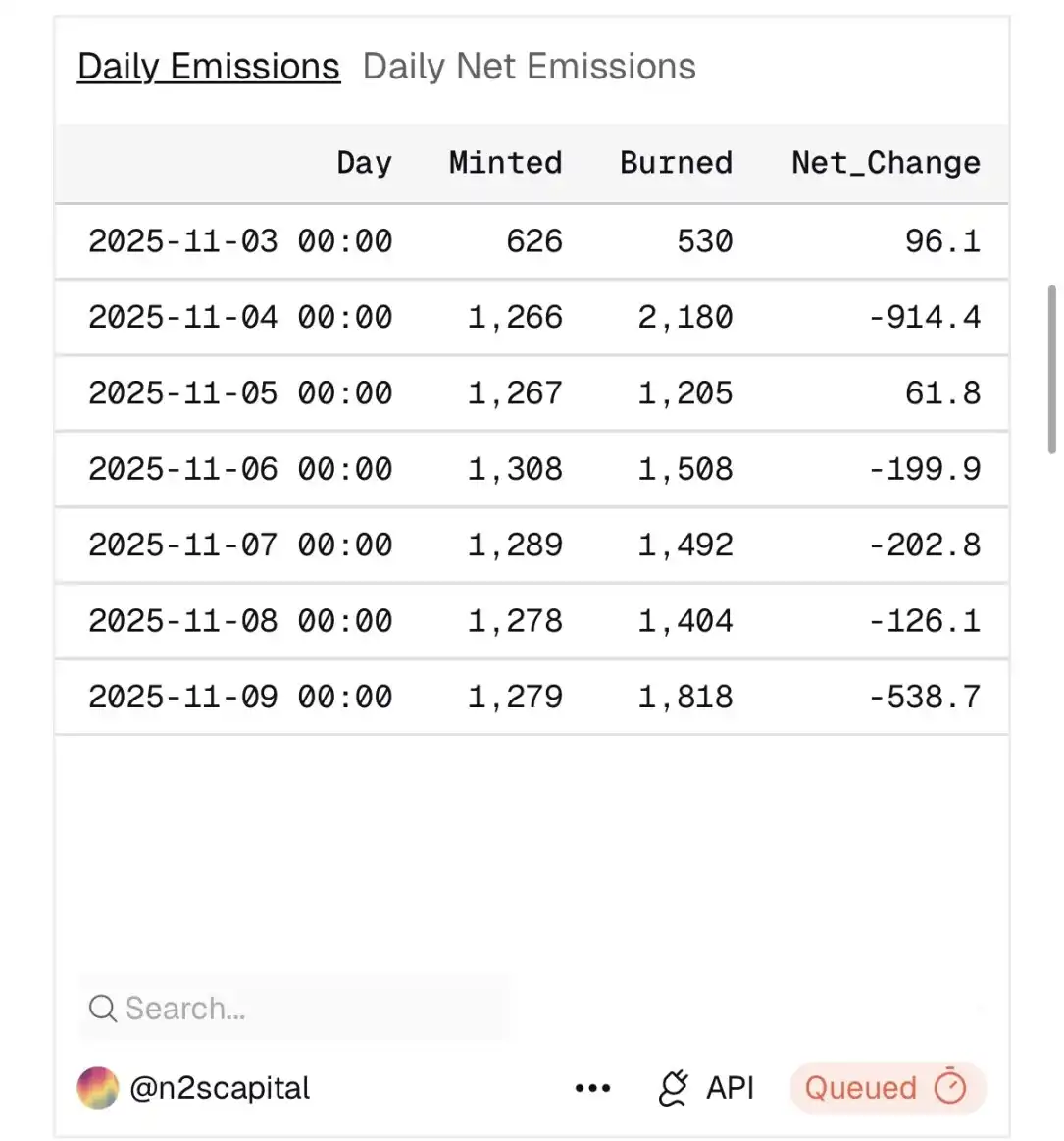
ORE will maintain its existing maximum supply limit of 5 million tokens and a stable average issuance rate of about 1 ORE per minute. However, the introduction of protocol income and automatic burial mechanisms implies that if the protocol income is significant, the net issuance may fluctuate between limited inflation and unlimited deflation. According to Dune data, five out of the past seven days saw ORE in a deflationary state.
errorYou may also like

Who's at the CFTC Table? A Rebalancing of American Fintech Discourse

AI Trading vs Human Crypto Traders: $10,000 Live Trading Battle Results in Munich, Germany (WEEX Hackathon 2026)
Discover how AI trading outperformed human traders in WEEX's live Munich showdown. Learn 3 key strategies from the battle and why AI is changing crypto trading.

Elon Musk's X Money vs. Crypto's Synthetic Dollars: Who Wins the Future of Money?
How do Synthetic Dollars work? This guide explains their strategies, benefits over traditional stablecoins like USDT, and risks every crypto trader must know.

The Israeli military is hunting a mole on Polymarket

Q4 $667M Net Loss: Coinbase Earnings Report Foreshadows Challenging 2026 for Crypto Industry?

BlackRock Buying UNI, What's the Catch?

Lost in Hong Kong

Gold Plunges Over 4%, Silver Crashes 11%, Stock Market Plummet Triggers Precious Metals Algorithmic Selling Pressure?

Coinbase and Solana make successive moves, Agent economy to become the next big narrative

Aave DAO Wins, But the Game Is Not Over
Coinbase Earnings Call, Latest Developments in Aave Tokenomics Debate, What's Trending in the Global Crypto Community Today?
ICE, the parent company of the NYSE, Goes All In: Index Futures Contracts and Sentiment Prediction Market Tool

On-Chain Options: The Crossroads of DeFi Miners and Traders

How WEEX and LALIGA Redefine Elite Performance
WEEX x LALIGA partnership: Where trading discipline meets football excellence. Discover how WEEX, official regional partner in Hong Kong & Taiwan, brings crypto and sports fans together through shared values of strategy, control, and long-term performance.

Best Crypto to Buy Now February 10 – XRP, Solana, Dogecoin
Key Takeaways XRP is set to revolutionize cross-border transactions, potentially reaching $5 by the end of Q2 with…
Kyle Samani Criticizes Hyperliquid in Explosive Post-Departure Market Commentary
Key Takeaways: Kyle Samani, former co-founder of Multicoin Capital, publicly criticizes Hyperliquid, labeling it a systemic risk. Samani’s…
Leading AI Claude Forecasts the Price of XRP, Cardano, and Ethereum by the End of 2026
Key Takeaways: XRP’s value is projected to reach $8 by 2026 due to major institutional adoption. Cardano (ADA)…
Bitcoin Price Prediction: Alarming New Research Cautions Millions in BTC at Risk of ‘Quantum Freeze’ – Are You Ready?
Key Takeaways Quantum Threat to Bitcoin: The rise of quantum computing presents a unique security challenge to Bitcoin,…
Who's at the CFTC Table? A Rebalancing of American Fintech Discourse
AI Trading vs Human Crypto Traders: $10,000 Live Trading Battle Results in Munich, Germany (WEEX Hackathon 2026)
Discover how AI trading outperformed human traders in WEEX's live Munich showdown. Learn 3 key strategies from the battle and why AI is changing crypto trading.
Elon Musk's X Money vs. Crypto's Synthetic Dollars: Who Wins the Future of Money?
How do Synthetic Dollars work? This guide explains their strategies, benefits over traditional stablecoins like USDT, and risks every crypto trader must know.


 App
App