
 Buy Crypto
- Markets
 Futures
- Spot
- Copy Trade
- Earn
- More
For $3.3 Billion Loan, El Salvador May Drop Mandatory Business Acceptance of BTC Payment

Original Article Title: "El Salvador Plans to Repeal Mandate for Businesses to Accept BTC Payments in Exchange for $3.3B IMF, World Bank Loan"
Original Article Author: DaFi Weaver, Dynamic Trend at BlockTempo
El Salvador became the world's first country to adopt Bitcoin (BTC) as legal tender in mid-2021, a decision that was met with strong criticism and pressure from the International Monetary Fund (IMF) at the time.
Prior to this, the Salvadoran government had been seeking an IMF credit line to address its fiscal issues, but the IMF demanded that El Salvador amend its Bitcoin law, stating that Bitcoin's legal tender status was a major obstacle to the country receiving credit support. As a result, negotiations between the two parties stalled for two years.
El Salvador Plans to Repeal Mandate for Businesses to Accept Bitcoin Payments
However, according to a report by the Financial Times citing sources familiar with the matter, El Salvador is currently in negotiations with the IMF and is considering taking a step back by repealing the legal requirement for businesses to accept Bitcoin as a form of payment. Instead, businesses would autonomously decide whether to accept Bitcoin payments in exchange for a $1.3 billion loan from the IMF.
The agreement is expected to be reached in the next two to three weeks. The report states that an IMF delegation has arrived in El Salvador to finalize the details of the agreement with President Nayib Bukele's government.
It is worth noting that the agreement with the IMF will also unlock two additional loans, one of $1 billion from the World Bank, and another of $1 billion from the Inter-American Development Bank. Therefore, in total, El Salvador plans to relax the Bitcoin acceptance requirement, with the opportunity to receive up to $3.3 billion in loans.
In order to reach an agreement with the IMF, El Salvador will also need to take measures to reduce the government deficit. Sources revealed that the Salvadoran government plans to reduce the budget deficit by 3.5 percentage points of GDP over the next three years through spending cuts and tax increases. Additionally, the government will pass an anti-corruption law and increase foreign reserves from $11 billion to $15 billion.
In response to this news, an IMF spokesperson declined to comment, citing the organization's policy of not discussing ongoing negotiations.
IMF Calls for Abandoning Bitcoin Strategy
The IMF has consistently opposed El Salvador's adoption of digital currency, citing risks to financial stability and integrity, and has often called on the Bukele government to cease accepting cryptocurrency as legal tender.
In October of this year, the IMF once again recommended that El Salvador scale back its Bitcoin-related policies and strengthen the regulatory framework for digital assets. Julie Kozack, Director of the IMF Communications Department, said at the time:
“We recommend narrowing the scope of the Bitcoin Law, strengthening supervision and regulation of the Bitcoin ecosystem, and limiting the government's exposure to Bitcoin.”
As early as two years ago, when El Salvador adopted BTC as legal tender, an IMF spokesperson criticized the country's Bitcoin law, warning of “macroeconomic, financial, and legal issues” it would raise. The IMF has repeatedly highlighted the volatility and potential risks of Bitcoin, which could threaten El Salvador's economic stability, hence the call for a reassessment of related policies.
However, in August of this year, the IMF also stated that many of the risks of El Salvador's Bitcoin experiment have “not materialized” yet. While the tone seems to have softened, the statement added that El Salvador needs to minimize the risks associated with adopting Bitcoin as legal tender as much as possible.
El Salvador Holds Nearly $600 Million in Bitcoin
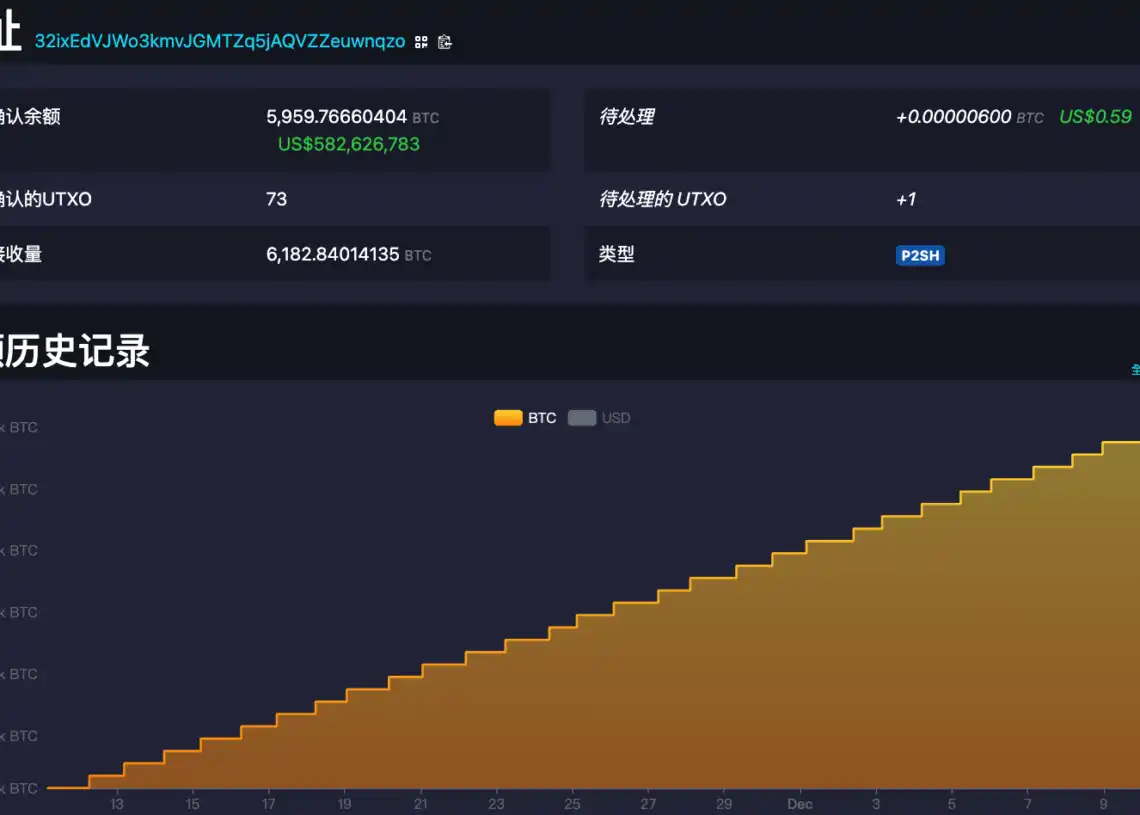
Currently, El Salvador continues to purchase one Bitcoin per day, with a total Bitcoin holding of 5,960 coins valued at over $580 million.
As Bitcoin reached the $100,000 milestone, El Salvador's sovereign bonds also rebounded from a significant discount to near-par trading. Bukele commented last week on the simultaneous rise in bond prices and Bitcoin, stating:
“For the first time in history, Bitcoin has driven a sovereign bond up in traditional markets.”
You may also like

The New Yorker in-depth investigation interpretation: Why do OpenAI insiders consider Altman untrustworthy?
Two Divided Worlds: Insights from the New York Digital Asset Summit, the Most Institutionalized Blockchain Conference

Top Ten Reveals of CZ's New Book: Advance Knowledge of "94", the Inside Story of Huobi's Change of Ownership Made Public for the First Time

Ceasefire Overnight Erases War Premium, Three Fault Lines Only One Sealed | Rewire News Morning Brief

Robinhood Secures 'Trump Account': Enabling Millions of Newborns to Access the Stock Market

Afraid to Open the Pandora's Box? Anthropic's Most Powerful Model Ever Dares Not Be Disclosed

US-Iran Ceasefire: A Temporary Pause or Prelude to Renewed Conflict? Market Outlook for Oil, Gold, and Bitcoin
April 8, 2026 – A temporary ceasefire between the U.S. and Iran has provided some immediate relief to the global markets, but the fundamental question remains: Will the cessation of hostilities hold, or is this merely a brief reprieve before a resumption of conflict? As the situation unfolds, market observers are closely monitoring how key assets like oil, gold, and Bitcoin will react in the coming weeks. This article explores whether the ceasefire is a sign of lasting peace, assesses the short-term market implications, and delves into the evolving role of Bitcoin in the global financial landscape.

WEEX Market Update: U.S.-Iran Ceasefire Sparks Bitcoin Price Surge
April 8, 2026 – In a significant shift in global geopolitics, U.S. President Donald Trump has announced a temporary two-week ceasefire with Iran, resulting in a notable market reaction across various asset classes. This development comes after discussions between Trump, Pakistani Prime Minister Shahbaz Sharif, and Army Chief General Asim Munir. The announcement is already reverberating through markets, particularly in oil, gold, and cryptocurrencies.
Morning Report | South Korean financial institutions pilot stablecoin payments for foreign users; Morgan Stanley Bitcoin ETF is about to be listed; CME plans to launch AVAX and SUI futures contracts

EigenCloud Founder: AI and Cryptocurrency are Creating the Next Trillion-Dollar Asset Class
From Panic to Pumps: How Bitcoin Traders Are Playing the 2-Week US-Iran Ceasefire
For most people, the two-week US-Iran ceasefire is about geopolitics, oil prices, and whether World War III gets postponed. But for crypto traders glued to their screens late Sunday night, it was something else entirely: the clearest risk-on signal in months.

US-Iran Ceasefire Triggers Oil Plunge, Bitcoin Surge, and Gold Rally
Despite the sharp rally, caution is warranted. The $70,000–$72,000 zone has historically been strong resistance. The ceasefire is only temporary (two weeks), and any breakdown in negotiations could trigger a sell-off toward the $62,000–$65,000 support zone. For now, Bitcoin needs to close decisively above $72,500 to confirm a true breakout; failure to do so within 48–72 hours could lead to a swift retracement.

OpenAI has no "New Deal," a blueprint for AI that refuses to pay.

Wall Street Flash Mob Run? Mega-Cap Stock Plunge, Goldman's Great Escape, Illustrated Guide to Private Credit Crisis

OpenAI Feud: Power, Trust, and the Uncontrollable Boundaries of AGI
「AI Doomsday Cult」 Sends Operatives into the Strait of Hormuz: What Did They Find?
Everyone is waiting for the war to end, but is the oil price signaling a prolonged conflict?


 App
App